 BRIDGE1
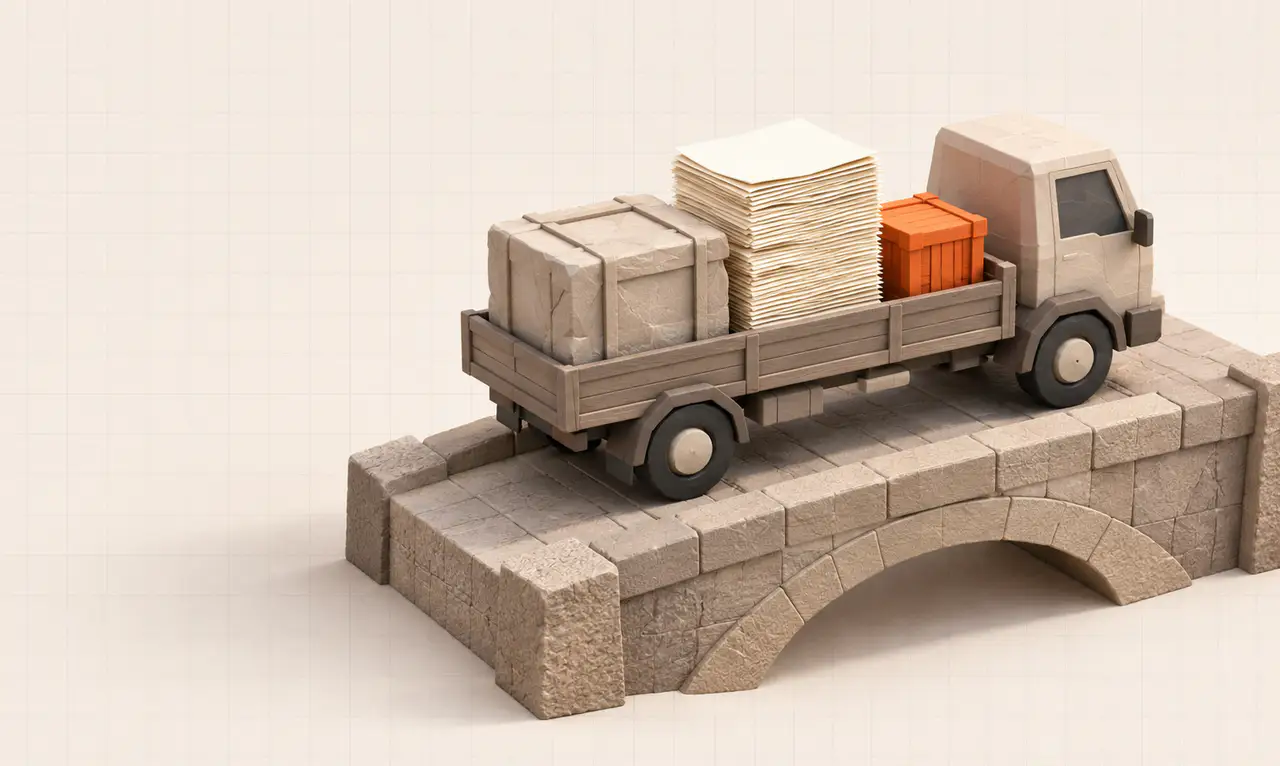
A download takes disk space. To run the model, your Mac needs room for weights, chat history and engine overhead. macOS and your other apps need memory too. Keep your editor and the apps you need open when you plan the session. A budget that depends on closing them may be of little use once work starts.
The question you type is only part of a request. Client rules, source code, past replies and tool results all take space. Leave room for the answer and its follow-up. First choose the files and facts the task needs. Then check whether the offered window can hold them.
The catalog-backed table keeps memory beside each exact profile. Do not subtract a download size from a recorded peak to calculate a conversation cache: those figures do not isolate the same memory components.
Common scale: 0–60 GB
Qwen3.8 27B
4-bit · MLX
- Download size
- 16.1 GB
- Catalog memory estimate
- 55.4 GB estimated
- Measured peak at this window
- not measured
- Admitted window
- 131,072 tokens
Catalog date:
Qwen3.8 27B
GGUF UD-Q4_K_S · GGUF / llama.cpp
- Download size
- 15.4 GB
- Catalog memory estimate
- 41.8 GB estimated
- Measured peak at this window
- not measured
- Admitted window
- 262,144 tokens
Catalog date:
The catalog keeps download size, memory and context together, with estimates distinguished from measured depth.
Swipe to see the whole row
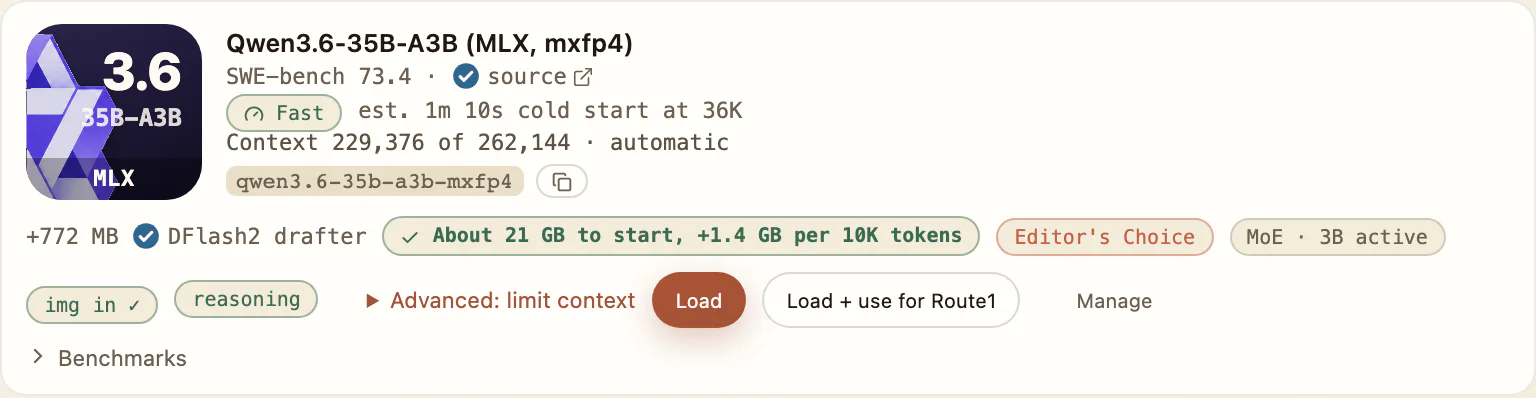
Read the approximate start memory and conversation growth beside the automatic context limit.
For Qwen3.8 27B MLX four-bit: Measured to 82,541 tokens (39.1 GB peak, M1 Max 64 GB). The 131,072-token window is estimated at 55.4 GB. The shorter observed conversation and larger projected window are different evidence.
If your intended work needs the larger window, that gap matters. A loaded model does not demonstrate a conversation at the estimated depth. Keep the measured peak beside its token count. Check the offered window on the Mac where you will work.
Ternary Bonsai 2 27B MLX 2-bit illustrates the distinction: Measured to 65,964 tokens (39.7 GB peak, M1 Max 64 GB). The 81,920-token window is estimated at 53.0 GB. Reduced weight precision does not remove the memory needed by the conversation.
Compare profiles at their stated depths and conditions. A smaller file may save disk space. A lower peak may describe a shorter chat. An estimate may cover a larger window. Read each figure in that scope. None alone proves that it will carry your required session.
Bridge1 publishes an Apple Silicon minimum of 24 GB unified memory and recommends 32 GB or more. Those product requirements do not mean every profile’s reference window fits. Select the intended profile, inspect its offered window on your Mac and retain the generated client limits.
List the source that must remain available, the instructions that govern the edit and the acceptance check. If they will not fit, narrow the task. You can also choose another supported profile. Replacing the offered value with a model family’s native ceiling does not create room.
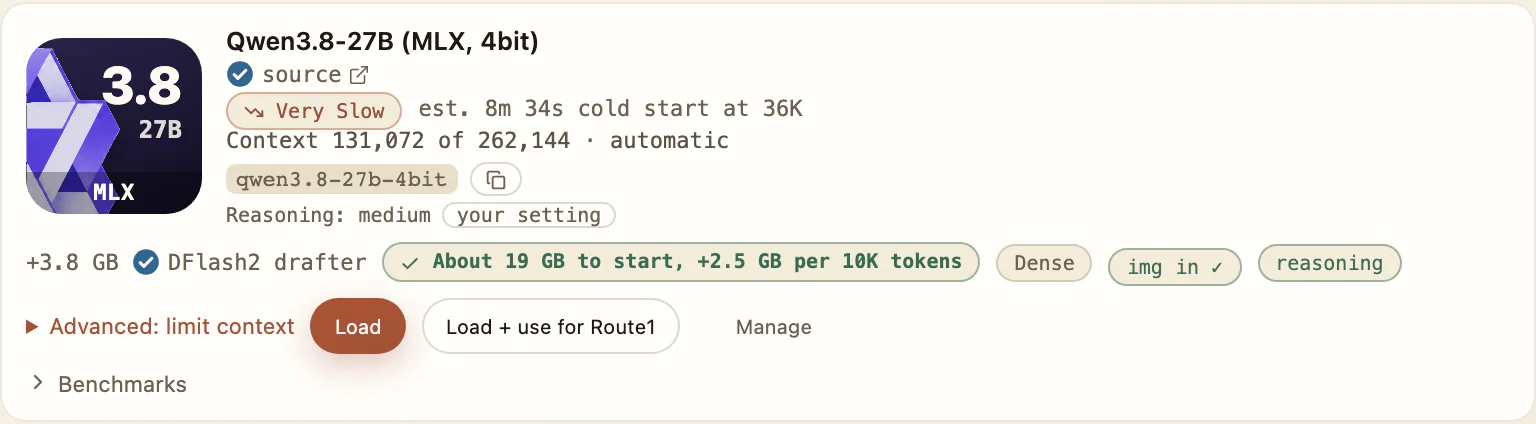
Swipe to see the whole row
The offered window and approximate growth label belong to this MLX profile. The visible reasoning setting belongs to the capture machine.
A small code change can need less carried history than a whole-project discussion. Supply the relevant files and the current requirement, then inspect the completed result before widening the job. Preserve constraints that determine correctness; removing them merely to shorten the request changes the task.
When useful history already fills a session, decide what to carry into a fresh task and check the work after history is shortened. For a startup refusal, check the model’s readiness state.
Record your Mac, exact profile, offered window and the workload you kept open. Add the depth and conditions beside any observed peak, while leaving the catalog estimate labelled estimated. That note lets you distinguish a different session budget from a different hardware result.
For a hardware purchase, the reference 64 GB M1 Max cannot settle an unmeasured combination on another Mac. Need to keep a long chat open? Its fit remains unknown until that Mac and workload have been checked. Do not extrapolate a short reply into full-window headroom.
Reference Mac: Apple M1 Max · 32-core GPU · 64 GB. Decode is engine-reported tokens per second; other Macs are not measured.
4-bit
Qwen3.8 27B
- Engine
- MLX
- Download
- 16.1 GB
- Admitted window
- 131,072 tokens
- Memory: measured or estimated
- 55.4 GB · estimated
- Measured depth and window estimate
- Measured to 82,541 tokens (39.1 GB peak, M1 Max 64 GB). The 131,072-token window is estimated at 55.4 GB.
- Short decode
- 20.0–20.7 tok/sconditions not recorded
- Decode at depth
- 20.8 tok/sconditions not recorded
- SWE-bench Verified (base weights)
- not measured
- Catalog date
- 2026-10-09
GGUF UD-Q4_K_S
Qwen3.8 27B
- Engine
- GGUF / llama.cpp
- Download
- 15.4 GB
- Admitted window
- 262,144 tokens
- Memory: measured or estimated
- 41.8 GB · estimated
- Short decode
- not measured
- Decode at depth
- not measured
- SWE-bench Verified (base weights)
- not measured
- Catalog date
- 2026-10-09